Showroom Lighting Design in Dubai: 8 Decisions That Shape How Cars Look
Showroom lighting design in Dubai does more than make a space bright. It decides how paint and body lines read, how customers move between vehicles, and how the brand feels from the street. Dubai showrooms also deal with strong daylight, large glass frontages and long opening hours, so lighting has to be planned together with the layout, ceiling and air conditioning, not added at the end. These eight decisions help owners and fit-out teams get it right.
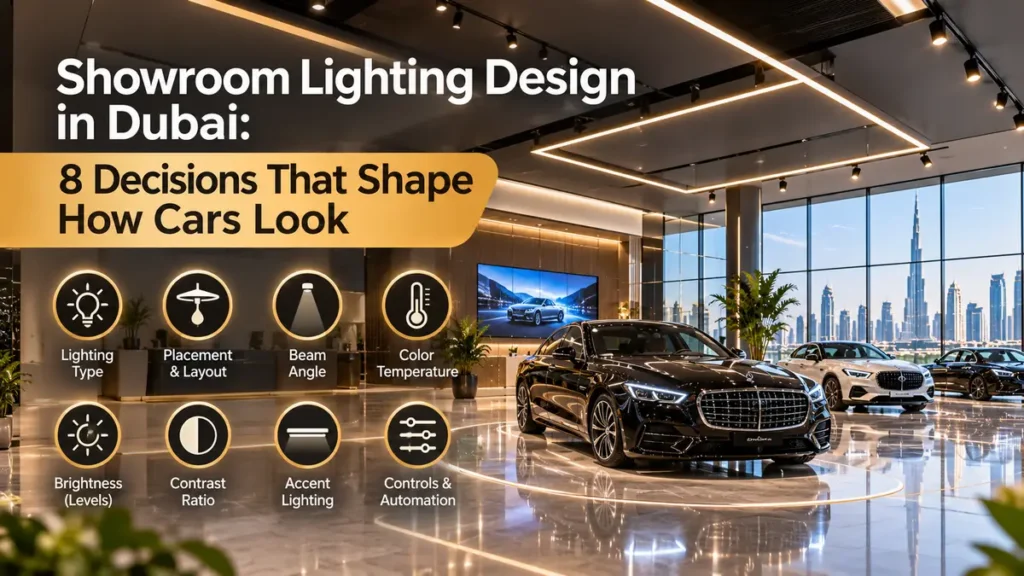
1. Start Showroom Lighting Design in Dubai With the Layout
Lighting should follow the floor plan. Mark the display bays, reception, customer lounge, delivery area and service reception first, then decide what each zone needs. A display bay needs focused light on the vehicle, a lounge needs a softer and more comfortable level, and a delivery area needs light that feels special. Fixing fixture positions before the layout is final usually means moving them later.
2. Layer the Lighting
A good showroom uses three layers. General lighting gives overall visibility and safe movement. Accent lighting highlights vehicles and key displays. Feature lighting picks out brand walls, signage and architectural details. Relying on one type of light makes a showroom look flat and makes every car look the same. Each layer should be controlled separately so it can be adjusted.
3. Light the Vehicles Carefully
Glossy paint reflects everything above it. Poorly placed fixtures create hot spots and glare that hide the body lines instead of showing them. Light cars from angles that reveal their shape, and test with a real vehicle on site before the positions are fixed. Ceiling height and the ceiling grid also affect where fixtures can go, so the ceiling design and the lighting plan need to be developed together.
4. Manage Daylight and the Glass Frontage
Large glazing brings strong sun into the showroom, which can cause reflections on windscreens and paint and change how colors look during the day. Solar control glass, shading and lighting controls that adjust the interior level through the day help keep the look consistent. Planning for daylight early is part of good showroom lighting design in Dubai, because the same showroom can look very different at noon and in the evening.
5. Choose Color Temperature and Color Rendering
Neutral to warm-neutral white light usually shows paint colors accurately. Ask for LED fixtures with good color rendering, and keep the same color temperature across the showroom except in deliberate feature areas. Mixed temperatures make the same car look different from one bay to the next, which customers notice even if they cannot say why.
6. Plan Lighting Controls and Scenes
Dimmable zones and preset scenes let the showroom change between opening hours, evening, special launches and after-hours display. Controls also reduce energy use and help the lighting stay consistent over time. They need to be coordinated with the electrical design from the start so the wiring, panels and control points are in the right places.
7. Coordinate Lighting With MEP and Joinery
Lighting needs power, cable routes and ceiling space that also serve air conditioning, sprinklers, smoke detection and sound. Joinery such as reception counters, display units and brand walls can include integrated lighting, which has to be planned with the joinery drawings. When one team handles design, MEP and joinery, these clashes are caught on paper instead of on site. See how this worked on a real project in our car showroom fit-out case study, where design, MEP and in-house joinery were delivered together.
8. Allow for Approvals, Maintenance and Energy
Fire and life safety requirements, emergency lighting and exit signage affect the lighting plan, and building management may have its own rules. Choose fixtures that can be reached and replaced easily, and consider LED options for lower energy use and lower heat load on the cooling system. The Dubai Municipality website is a useful starting point for general requirements.
Common Showroom Lighting Mistakes
- Using only one layer of light, so cars look flat
- Placing fixtures before the cars and layout are final
- Ignoring glare from the glass frontage
- Mixing color temperatures across the showroom
- Leaving lighting controls and wiring until late in the project
Planning Showroom Lighting Design in Dubai?
River Island Interiors designs and builds car showrooms with design, civil works, MEP and in-house joinery under one ISO 9001:2015 certified team. To see how a showroom project is planned from brief to handover, visit our car showroom interior design in Dubai page. For showroom lighting design in Dubai tailored to your space, contact us for a free site visit.
FAQs
A layered scheme works best: general lighting for visibility, accent lighting on the vehicles and feature lighting on brand elements, all in a consistent neutral-white color temperature.
Yes. Lighting affects the ceiling, power, MEP and joinery, so it should be part of the design from the first layout.
Strong sun and large glass frontages can cause glare and change how paint colors look, so shading and adjustable lighting controls need to be planned together.