Business Center Design Trends Shaping Dubai in 2026
Business centers in Dubai are evolving faster than almost any other commercial real estate category. As hybrid work, coworking demand, and tenant expectations continue shifting, the business center design trends shaping new and renovated buildings today look markedly different from even a few years ago.
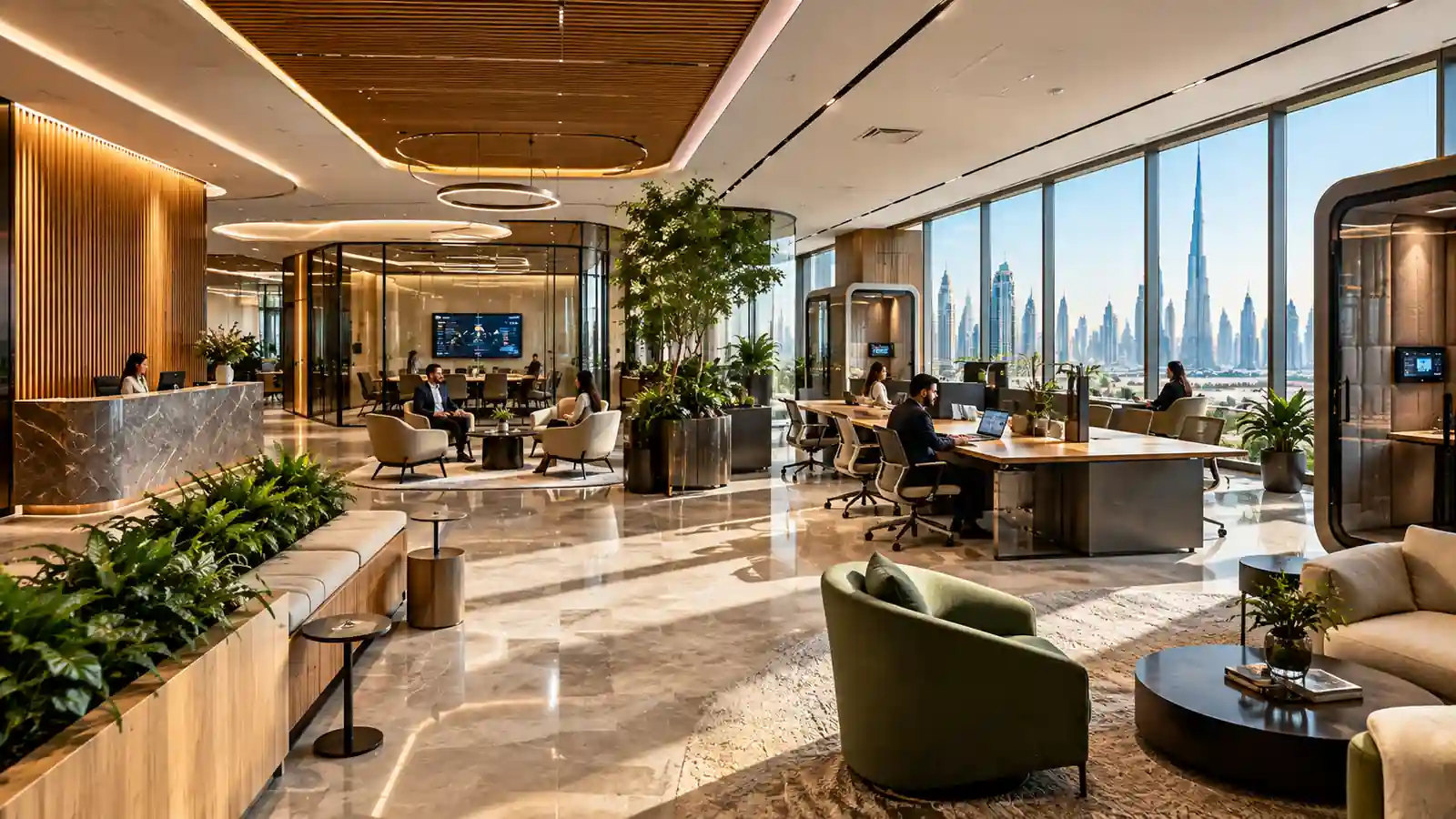
Flexible, Reconfigurable Spaces Are No Longer Optional
One of the clearest business center design trends right now is the shift away from fixed, permanent office layouts toward modular partition systems that can be reconfigured as tenant needs change. Buildings that can convert a floor from ten small offices to two larger suites — without a full renovation — are winning tenants over ones that can’t.
Coworking Integration Has Moved From Trend to Standard
What started as a niche offering is now close to a baseline expectation. Business center design trends increasingly call for dedicated coworking and hot-desking zones alongside traditional leased offices, requiring careful space planning to keep these areas distinct in feel while sharing building infrastructure efficiently.
Shared Amenities Are Becoming a Competitive Differentiator
Lobbies, shared meeting rooms, and communal lounges used to be purely functional. Now they’re a genuine selling point — well-designed shared spaces with quality finishes, good lighting, and comfortable furniture directly influence which building a tenant chooses. This is one of the more visible business center design trends because it changes a building’s entire first impression.
Technology Infrastructure Is Now a Design Input, Not an Afterthought
High-speed connectivity, video conferencing-ready meeting rooms, and app-based building access systems all require dedicated infrastructure planning during design, not retrofitting after occupancy. Business center design trends now treat data cabling, power distribution, and AV infrastructure as core considerations from the earliest concept stage.
Wellness-Focused Design Is Reaching Commercial Real Estate
Natural light optimization, biophilic design elements (greenery, natural materials), and improved air quality systems are increasingly part of business center briefs — driven by tenant demand for healthier workplace environments. This mirrors a broader shift seen across commercial interior design, but is particularly pronounced in business centers competing for quality tenants.
Multi-Tenant Compliance Planning Is Getting More Sophisticated
As business centers pack more diverse tenant types into shared buildings — traditional offices, coworking spaces, sometimes small retail or F&B — compliance planning around fire and life safety, HVAC zoning, and metering has become significantly more complex. Getting this right at the design stage avoids costly retrofits once tenants move in.
Sustainability Certifications Are Increasingly Part of the Brief
Green building certifications and energy-efficient system design are becoming a standard request in business center fit-outs, not just a premium add-on. According to research from JLL on the future of workplace design, tenants — particularly larger corporate occupiers — are increasingly prioritizing buildings with strong sustainability credentials when choosing office space. For business center owners, this means LED lighting systems, efficient HVAC zoning, and water-saving fixtures are shifting from optional upgrades to genuine leasing requirements, especially for buildings competing for higher-tier corporate tenants.
What This Means for Business Center Owners and Developers
Staying ahead of business center design trends isn’t about chasing every new amenity — it’s about understanding which shifts genuinely affect tenant retention and building value. A well-planned business center today needs to balance flexibility, shared-space quality, technology infrastructure, and multi-tenant compliance from day one.
Frequently Asked Questions
Often yes — targeted upgrades like improved shared spaces, coworking zones, or better technology infrastructure can meaningfully improve tenant retention without requiring a full building renovation.
This varies by building size and target tenant profile, but the trend is toward allocating meaningfully more space to shared amenities than in traditional office buildings, since they’ve become a genuine leasing differentiator.
Yes — coworking zones typically bring different occupancy density and usage patterns than traditional offices, which affects fire safety, HVAC, and metering planning and should be addressed early in design.
Looking to bring your business center up to current design standards? Contact us to discuss your project, or see our full business center interior design services.