Commercial Joinery Dubai: The Proven, Complete Guide
Commercial joinery Dubai projects are easy to underestimate. Reception desks, retail counters, restaurant booths, office partitions, wardrobes and wall panelling are all joinery, and together they make up much of what customers actually see and touch. They are also where schedules slip and budgets drift, because joinery sits between design, manufacturing and site work. This guide explains what commercial joinery covers, how to choose between in-house and outsourced production, and how to plan it so it arrives on time and fits on site.
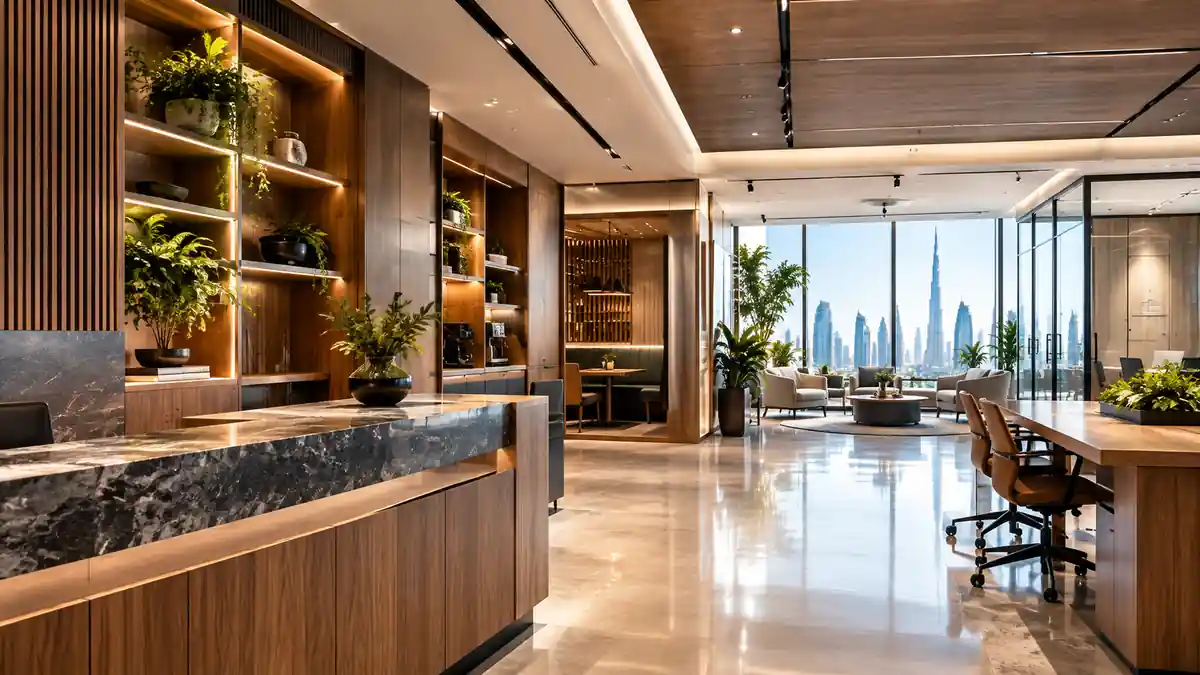
What Commercial Joinery Dubai Projects Include
Joinery is the made-to-measure carpentry of a fit-out. Pieces are manufactured to fit a specific space, then installed on site. Commercial joinery Dubai work usually spans:
- Reception desks, counters and front-of-house feature walls
- Retail shelving, display units and cash desks
- Restaurant and café seating, bars and service counters
- Office workstations, meeting-room tables, storage and partitions
- Wall cladding, ceiling features and doors
Unlike loose furniture, these pieces are designed around the room, the lighting and the services behind them. That is why they need to be planned with the rest of the fit-out, not ordered at the end.
In-House or Outsourced Joinery
Contractors either manufacture joinery in their own workshop or subcontract it. Subcontracting can work for small, simple jobs, but on larger projects it adds handovers. Drawings pass from designer to contractor to a third-party workshop, and each handover is a chance for dimensions, finishes or delivery dates to be misunderstood.
With in-house production, the team that designs the space talks directly to the people building the pieces. Changes on site reach the workshop quickly, quality is checked before items leave the factory, and one party is accountable for the result. At River Island, joinery is made in our own factory alongside design, MEP and construction, so we treat commercial joinery Dubai clients need as part of one programme, not a separate package.
When you compare a joinery company in Dubai, ask whether it makes the work itself or subcontracts it. The answer affects how quickly problems get fixed.
Choosing Materials That Suit the Space
Material choice should follow how a space is used, not only how it looks.
- -High-traffic public areas such as reception desks and retail counters need hard-wearing surfaces and strong edge protection.
- -Humid or wet zones such as kitchens, bars and washrooms need moisture-resistant boards and sealed edges.
- -Feature walls and panelling can use veneers or finishes that give a premium look at sensible cost.
- -Solid timber suits statement pieces but needs careful detailing for movement and finish.
Where timber is used, ask about its origin. Responsible sourcing schemes such as the Forest Stewardship Council set recognised standards for certified wood.
Plan Joinery With MEP and Lighting
Joinery that ignores building services is a common cause of rework on site. Counters need routes for power and data. Wall panels must leave access to hidden services. Display units depend on lighting positions fixed early, and ceiling features have to work around air-conditioning grilles and sprinklers.
When joinery and MEP are coordinated on the same drawings before manufacture, these clashes are solved on paper instead of on site. This is one reason a single team handling the whole fit-out tends to deliver cleaner results than separate trades working from separate drawings.
Commercial Joinery Dubai Timelines and Approvals
Every piece moves through the same stages: design approval, shop drawings, sample and finish sign-off, manufacture, delivery and installation. Because items are made to measure, they depend on accurate site dimensions, so measuring once the space is ready avoids expensive adjustments.
Malls and landlords often have their own rules for finishes, delivery windows and installation hours. Building these into the programme early prevents joinery from becoming the item that holds up handover.
Questions to Ask Before You Appoint a Contractor
- -Is the joinery manufactured in-house or subcontracted?
- -Can we visit the workshop and see finish samples?
- -Who coordinates joinery with MEP, lighting and other trades?
- -How are site dimensions verified before manufacture?
- -How are snagging and defects handled after handover?
Frequently Asked Questions
Commercial joinery is bespoke, made-to-measure woodwork for business spaces, including counters, shelving, seating, partitions and wall panelling. It is manufactured off-site to fit a specific design, then installed during the fit-out.
An in-house team keeps design, manufacturing and installation under one roof. That means fewer handovers, faster responses to site changes and one party accountable for quality and delivery.
Plan Your Joinery Early
Good joinery is rarely noticed, and that is the point. It should feel like part of the space, not an afterthought. If you are planning an office, retail, restaurant or showroom project, talk to our team about commercial joinery Dubai businesses can rely on, from design through to installation.