Supermarket Fit-Out Trends: What’s Shaping Dubai Retail in 2026
Supermarket design has moved well past simple shelving and checkout counters. As Dubai’s grocery retail sector grows more competitive, the supermarket fit-out trends shaping new and renovated stores today are increasingly about experience, sustainability, and operational efficiency working together — not just square footage.
Experience-Driven Layouts Are Replacing Pure Efficiency Models
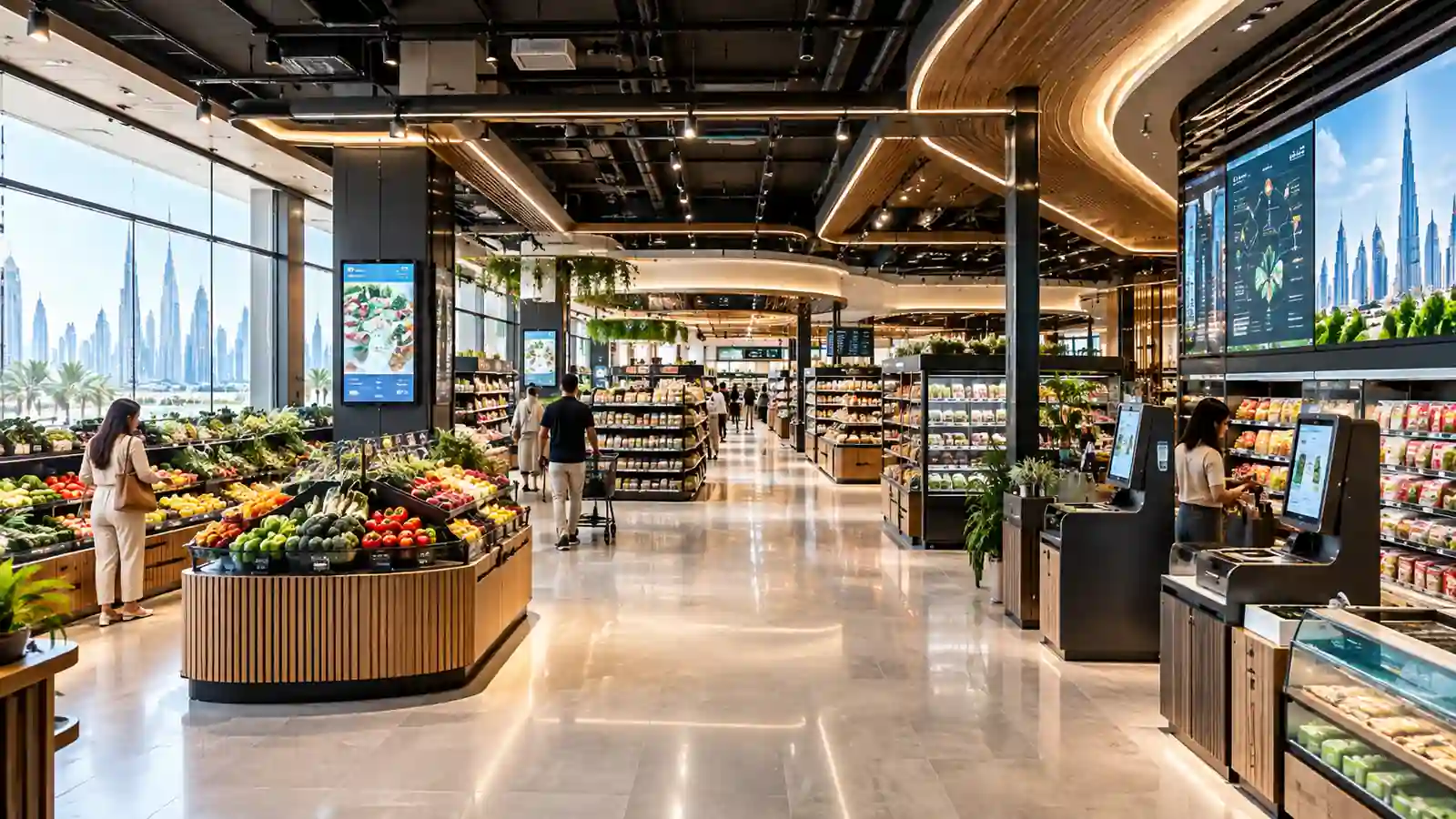
For years, supermarket layouts were designed almost entirely around efficiency — the fastest path from entrance to checkout. One of the clearest supermarket fit-out trends now is a shift toward experience-driven design: wider aisles near fresh produce and bakery sections, dedicated tasting or sampling zones, and sightlines that let natural light reach further into the store. Customers increasingly choose where to shop based on how a store feels, not just what it stocks.
Sustainability Is Now a Design Requirement, Not an Add-On
Energy-efficient refrigeration, LED lighting systems, and materials sourced with lower environmental impact have moved from “nice to have” to genuinely expected in new supermarket fit-outs. This is one of the most consistent supermarket fit-out trends we’re seeing requested at the design brief stage, driven both by long-term operating cost savings and by growing customer expectations around sustainable retail.
According to industry analysis from CampbellRigg Design Agency, sustainable materials and energy-efficient systems are now considered baseline expectations in supermarket retail design, not optional upgrades — a shift reflected directly in how new fit-outs are being briefed and budgeted from day one.
Technology Integration Is Reshaping the Checkout Experience
Self-checkout zones, digital price displays, and app-integrated loyalty programs all require dedicated space planning considerations that didn’t exist a decade ago. Supermarket fit-out trends today increasingly treat technology infrastructure — power, data cabling, screen mounting points — as a core part of the initial design brief, not a retrofit after opening.
Flexible, Modular Fixtures Are Replacing Fixed Shelving Systems
Static, built-in shelving is giving way to modular fixture systems that can be reconfigured seasonally or as product mix changes. This flexibility lets supermarkets refresh their layout for promotions, seasonal ranges, or shifting customer demand without a full renovation — a meaningful cost and time saving over the life of a store.
Cold Storage and Refrigeration Design Continues to Get More Sophisticated
As energy costs and sustainability expectations rise, refrigeration design has become a specialized discipline within supermarket fit-outs. Modern cold storage integrates more precisely with HVAC systems, uses better-insulated display cases, and positions high-turnover cold items to minimize both energy loss and staff restocking time — all decisions that need to be made at the MEP planning stage, not after construction begins.
Wellness and Fresh-Food Zones Are Getting More Design Attention
Fresh produce, bakery, and prepared-food sections are increasingly treated as the visual and experiential centerpiece of a supermarket, rather than just another aisle. Better lighting, open sightlines, and materials that read as “clean and fresh” (natural wood tones, greenery, open refrigerated cases rather than closed ones) are becoming standard in higher-end and mid-market supermarkets alike.
What This Means for Supermarket Owners Planning a Fit-Out
Staying current with supermarket fit-out trends isn’t about chasing every new idea — it’s about understanding which shifts genuinely affect customer experience and operating cost, and building those into a fit-out from the concept stage rather than retrofitting later. A well-planned supermarket fit-out today needs to balance experience-driven design, sustainability, technology infrastructure, and operational efficiency simultaneously.
Frequently Asked Questions
In most cases, yes — energy-efficient refrigeration and LED lighting typically pay back their added cost within a few years through reduced utility bills, and increasingly influence customer perception of the brand.
This varies by store size and customer demographics, but most modern layouts now reserve meaningful space — planned early in the design process — for both traditional and self-checkout lanes to run side by side.
Many can — modular fixtures, updated lighting, and refreshed fresh-food zone design can often be implemented in phases without closing the store for a complete overhaul.
Looking to bring your supermarket up to current design standards? Contact us to discuss your project, or see our full supermarket interior design services.